Tomodachi Life
Living the Dream, or is it?
The new Tomodachi Life game finally came out on April 16, 2026! But
how does it compare to its predecessor?
But first, what is Tomodachi Life? (If you want to skip straight to
the review of Tomodachi Life: Living the Dream,
click here)
Background
Let's start with the main focus of the game: Miis.
Miis are custom avatars Nintendo has put in every console since the
Nintendo Wii in 2006. Miis are 100% customizable, from their hair
type, face shape, all the way down to every facial detail. This
customization allows you to create almost anyone; you can make
people you know, fictional characters, actors, as long as they have
a face they can be made into a Mii!
Tomodachi Life first released on the 3DS in 2014. The gameplay loop
revolves around you taking care of your Miis; you have to feed them,
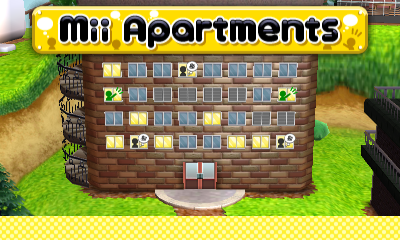
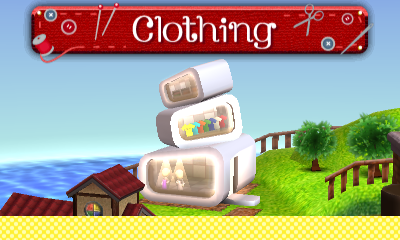
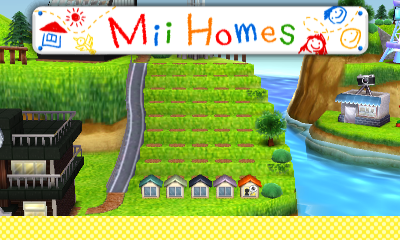
give them clothes, and decorate their apartments. Then, you get to
watch them develop relationships with one another. Miis can be
friends, lovers, or even enemies.
The game was truly one of a kind when it came out. The Miis felt
alive, they each had their own personalities and likes and dislikes.
They would ask for your opinion on other Miis, but you could never
directly force them to get along with others.
Gameplay
When you make a Mii happy by feeding them food, giving them clothes
and toys, or letting them talk and interact with their friends, they
would eventually level up. When a Mii levels up, you can give them
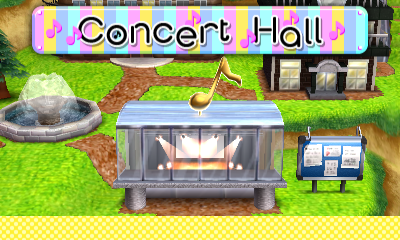
something special like a song they can sing at the concert hall,
gifts like cameras, travel tickets, sewing machines, and more. You
can also give your Miis unique expressions that they'll say
depending on the context.
Along with interacting with other Miis, Miis would also play small
minigames with the player. These minigames ranged from guessing what
the silhouette of an object was, or having to say objects in a
certain category without repeating what someone else had already
said.
Making the Island Feel Inhabited
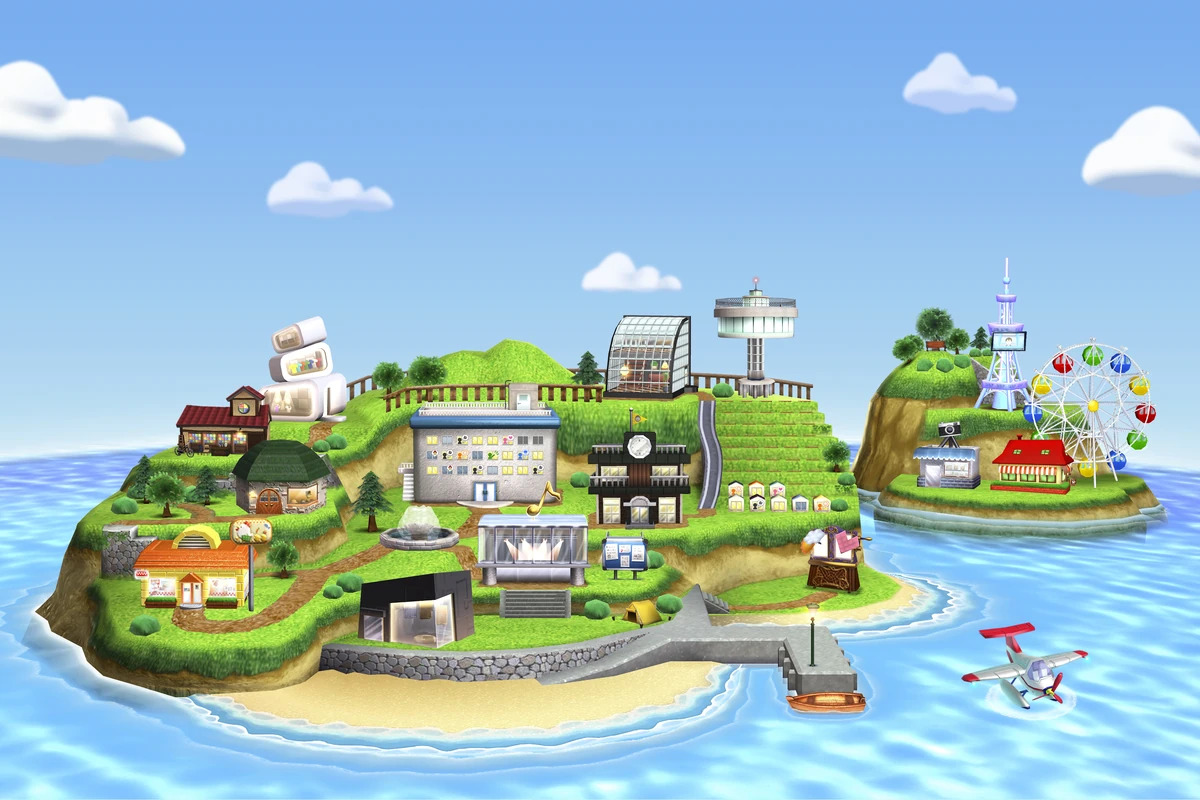
The game manages to make the island feel populated not only through
the Miis, but also through the various buildings and shops you
unlock along the way. It's important to note that the game's time
mimmicks our own; when it's 3:00PM for you it's 3:00PM for your
Miis. This means that depending on when you check in on your Miis,
they may be asleep and having dreams you can interact with, or they
can be out and about on the island socializing. Miis aren't the only
thing affected by the time, though. Depending on when you visit a
shop, their stock may change depending on the time and even the
season or day.
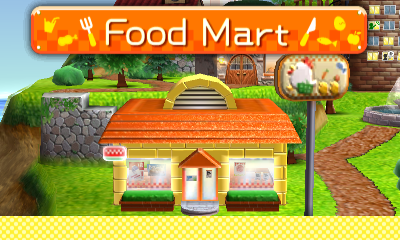
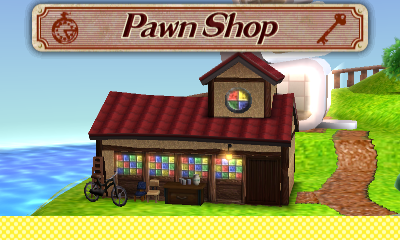
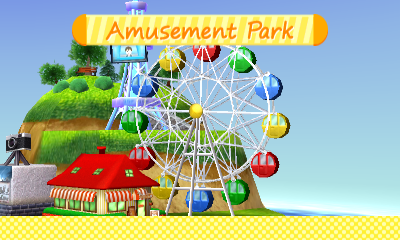
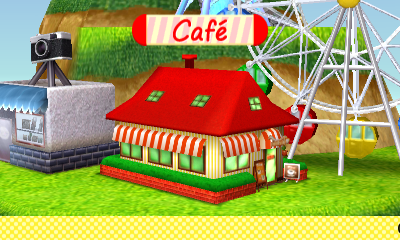
The buildings on the island range from simple shops to buy
food/clothes, all the way to ferris wheels and even concert halls
where you can create songs for Miis. Every building has a function.
Not-So-Sequel Spin-Off
Tomodachi Life went without a sequel for 13 entire years, but it did
recieve a spin-off of sorts. In July of 2017, we would get Miitopia
for the Nintendo 3DS. Miitopia is a linear RPG where all of the
characters from your party, non-player characters, and even the big
bad guy, are Miis. It plays completely differently from Tomodachi
Life, but has much of the same charm.
You start with a single Mii, choose a class, and watch as the dark
wizard steals the faces of all the Miis in Miitopia. Your quest is
to get their faces back, and vanquish the dark lord. Along the way,
you recruit new Miis with different classes to join your fight. Your
party forms relationships, some Miis might not like each other, some
might, and some may even fall in love. On top of that, you may even
end up with a juicy, dramatic love-triangle. Mii's relationships
with one another influences their attacks, a Mii might choose to
heal or protect a Mii they're in love with, or might refuse to heal
or buff a Mii they're rivalling with.
One of Miitopia's biggest strengths though, and the reason I'm
bringing it up here, is the custom face paint. In Miitopia, you can
paint on a Mii's face! This allows you to add even more
customization to the Mii maker's already ultra-customizable menu.
With the custom face paint, you can add details like tattoos,
piercings, scars, or anything else. The facepaint allows you to
truly make a Mii one of a kind.
Along with the facepaint, Miitopia allows for same-sex romances and
relationships. Because of this, though, the game is banned in
Russia. But for many players, this felt like a positive step in the
direction of inclusion.
This game, while completely different from Tomodachi Life, would
have many of its key features taken and implemented into the next
game, so I feel it's important to establish a bit about it before
talking about it later.
A promissing Sequel?
On March 27th, 2025, almost 12 years after Tomodachi Life came out,
we would recieve a Nintendo Direct about Tomodachi Life's sequel,
Tomodachi Life: Living the Dream
This was huge. Bringing a new Tomodachi Life game to a modern
console was insane. The game was stated to come out at some point in
2026, and fans were hyped. While the first Nintendo Direct would
only offer a sneak peak of what we should expect, the subsequent
trailers we recieved only raised expectations.
The customization offered in Living the Dream was promised to be the
most detailed aspect of the game, and in many ways it is. Not only
were dozens of new eye, ear, hair, mouth and eyebrow options added,
we were given the ability to make Miis any colours we wanted. While
this may sound like an odd thing to be excited about, it opens up an
entire new range of possibilities. It allows you to create aliens,
animals, even the simpsons if you so wanted. As well as that, the
facepaint made a comeback.
Not only were Miis customizable, but every part of the island was
too. You get to personally build your island, choosing where paths,
houses, stores and decorations go. On top of that, we were also
given the opportunity to make our own decorations.
Creativity Without Limits
Now, we were given the ability to truly make an island that felt
entirely ours. You can make custom food for your Miis, custom
clothes, you can give them custom houses, create custom paths, the
sky seemed almost literally endless.
We wouldn't recieve much more information on the game itself, or the
development process, until the open demo was released a year later,
on March 25th, 2026. The demo allowed you to play through the first
hour or so of the game; you could create a few Miis and special
meals, then you were told to wait till the game came out.
The demo offered the experience people wanted, the ability to put
their friends, favourite characters and loved ones onto their
island. But with the limit of only 3 Miis in the demo, people felt
they couldn't do much. Of course, that's to be expected with a demo,
but another problem soon began to arise.
When the game fully released in April, people began to notice that
the feeling of not being able to do much didn't just stop at the
demo. In fact, the game felt very similar to the demo, with a few
slight add-ons.
Time Crunch
Many things included in the original game are simply nowhere to be
found in its sequel. For instance, we lost the Concert Hall. You
can't make songs for the Miis anymore, they can't even sing. Well,
technically they can sing, but they don't say words. It's
simple "la la la"s and "doo doo doo"s now. Every building from the
original game bar the essential ones (the food and clothing store)
have been removed. This means the game is also missing a lot of
minigames that took place in those buildings.
When explaining what happened to the original features present in
the first, the developpers admitted that they simply didn't have the
time to impliment them. In fact, we almost lost
Mii News. Someone on the team had to beg for it to
be included, stating that it's one of the most important aspects of
Tomodachi life (which is true!)
But why was so much of this game rushed? Why did we lose so much?
Ship Now, Fix Later
We're entering an era in gaming where games don't have to be
finished anymore. Almost every major video game company has released
a title that they simply have not finished. Now, unfinished games
are simply finished with updates and patches. There's nothing wrong
with adding new features in new updates; Minecraft and Terraria are
amazing examples of this. The difference with those games and Call
of Duty, though, is that they were released in a finished state at
the time, and added onto later. This practice is commonly referred
to as "Ship Now, Fix Later."
While almost every other company seemed to fall into the Ship Now,
Fix Later trap, Nintendo held strong. The common consensus with
Nintendo games was that you always paid for the full product. That
was, until Animal Crossing New Horizons.
A Finished Unfinished Game
Animal Crossing New Horizons was Nintendo's first test of Ship Now,
Fix Later. The game shipped with many features from previous
installments simply missing, while new features lacked polish or
refinement. The DIY system in the game was notorious for being slow,
you could only craft one item at a time, which made bulk crafting a
chore.
In 2026, New Horizons would also recieve a massive update,
coinciding with Animal Crossing's 25th anniversary.
This update added almost every feature fans had been asking for
since the game came out in 2020. Despite the relatively lackluster
state the game had been in for the past 6 years, it also proved to
be one of Nintendo's best sellers, and the most well-known of the
series. This showed Nintendo that releasing a game with every
feature wasn't necessarily a problem, as long as it wasn't
advertised to be in the game, and it would be added in the future.
So How is it?
So, how does Tomodachi Life Living the Dream compare to its
predecessor?
What it Does Well
Nintendo promised its fans that Tomodachi Life would have
exceptional customization, and it does. In the trailers, characters
were also shown to be non-binary, as well as preferring members of
their own gender. While same-gender couples had already been
implemented in Miitopia, the inclusion of pronouns and the ability
to make characters non-binary was an incredible leap forward in
terms of progress and standards for inclusion in games going
forward. Fastforward to the game's release, and these promises were
kept! Tomodachi Life Living the Dream serves as Nintendo's "wokest"
game, and being able to have your miis truly express themselves down
to their preferred pronouns is amazing.
Many of the interactions between Miis is very well done; the game is
really humourous when it wants to be. Some say Mii relationships can
feel forced at times, but the general progression of relationships
is very well implemented.
The customization truly cannot be overstated. You have the ability
to create pretty much anything you want. I have personally made
clothes based on the clothes my Miis have in the media they come
from; I've created objects from the shows or games they come from,
food from memes I like, and so much more. I try my hardest to make
my Miis look like their "real" selves, and the facepaint allows you
to do that perfectly.
The personality test you use to assign your Mii's personality is
also scarily accurate at times, just a few questions gives you a Mii
that acts and thinks like their real self.
Where it fails
As stated before, a lot is still missing from this game. The lack of
minigames from the original game, as well as small features start to
make themselves present when you've spent more than a few hours on
the game. While the island can feel lively because of all the
decorations and people living in it, the inability to interact with
your Miis in more ways than just feeding them or introducing them to
each other begin to reveal the cracks in your immersion.
There's also the interactions with Miis themselves. Miis are never
allowed to be rude, not even to each other necessarily. They may be
annoyed from time to time, and get into fights (which you really
have to put your time into to make them happen), they are almost
always nice and friendly with one another. This may sound like an
odd problem to have, but having Miis who always agree with one
another and who never get into arguments can easily start to get
boring. It may be unfortunate, but drama is a lot of fun to watch.
To go with this point, you can never really have a "problematic"
Mii. While Miis can have different personalities, it becomes
increasingly difficult to notice a difference between them with just
how nice everyone is to each other. I have a couple Miis based on
characters who are objectively not "nice" and yet they act like
everyone else on the island. They are calm, sweet, and always ready
for conversation when they should be rude, sassy and stuck-up. I can
only hope we get to see the personalities be more diverce in the
future.
Another big problem is the lack of accents. The game prompts you to
choose where you're playing from, and where ever you pick, the Miis
will have accents to match. YOU CAN ONLY DO THIS ONCE. Since the
game has to keep track of the internal clock in order to prevent
cheating, you aren't allowed to change your nationality once it has
been picked. This means you only get one accent across your entire
island, however. You can imagine how this would be a problem if you
want to have British, French, Australian, or even Spanish or Russian
Miis. Instead, everyone has to have the same accent.
The game's unfinished feeling also extends to its quirks. As it
stands, ther are nowhere near enough quirks to give your Miis when
you level them up. You get an assortment of quirks that change how
they walk, how they stand, or they greet others, and a few other
things. This may sound like a lot, but many of these quirks are very
situational, like walking like a robot or doing karate-style
greetings. There are pages where it feels there should be more
content, but the available options simply end.
There are 16 unique gifts you can give to a Mii upon leveling them
up, only 16. 16 may seem like a lot as well, but much like the
quirks they are very situational gifts. You can give a soccer ball,
a guitar, dancing videos, a computer, a laptop, and a few other
things. Leveling up a Mii begins to feel like a chore once you run
out of ideas for them, because the lack of quirks and items in the
game make it quite difficult to justify giving a Mii something
you'll like.
While I praise the customization of the game, it is also not without
its faults. Most notably, there really aren't enough clothing
options for you to customize. You get long sleeve and short sleeve
shirts, long dresses and short dresses, skirts, shorts and pants, a
beanie and a cap. While you can make things like dress shirts,
suits, and more complex items, you'll constantly see the seems of
the clothing reminding you that it's a shirt or a pair of pants with
a layer of paint on it.
On top of that, you can't save a colour palette. There aren't even
hues in the game, just a screen where you can select the colour you
want. This means if you're working on a shirt that's the same colour
as the pants, unless you picked a default colour, you have to hope
you can choose a colour that looks similar enough to the pants,
instead of just being able to save a colour.
I know more content will come to this game in the following years,
it's still in a remarkably unpolished state right now. My biggest
issue with this though is the price Nintendo expects you to pay for
it. Tomodachi Life, the original one, was about $47 Canadian in
today's money. $35USD when it came out. Tomodachi Life: Living the
Dream is $60USD, or $83CAD. Considering the state the game is in
currently, 83 dollars feels like a rip off. You're paying double the
price for a game with half the features.
While it's become standard practice to wait for games to gradually
become more enjoyable through updates, Nintendo has always been held
to a higher degree of standards than their competition, at least
until the Switch 2. Nintendo has always been praised as different
than the competition, when they promise something, they deliver. The
easiest way for them to keep this image, then, is to promise less.
Then, add more later. You don't have to worry about expectations if
you deliver exactly what you promised. I don't want to say that all
Nintendo games going forward will lack the charm and touch earlier
games did, but if New Horizons was the first toe in the water for
Ship Now, Fix Later, Tomodachi Life: Living the Dream is the whole
foot.